Taxpayers who have paid more income tax than their actual liability may be entitled to claim a refund, but delays in processing refund claims have long been a practical concern.
A recent development may improve this process.
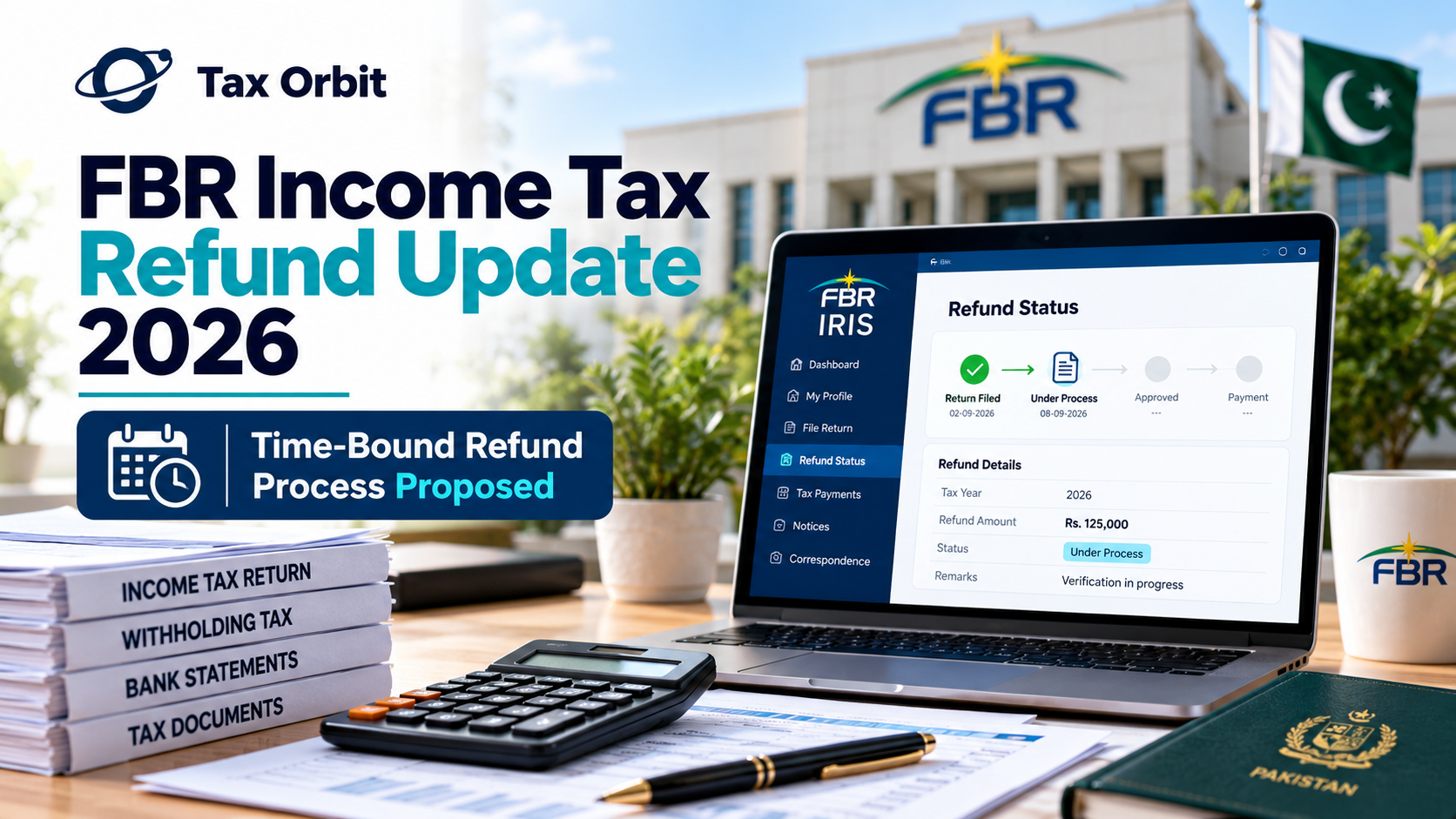
According to a report published on 17 October 2026, Chairman Federal Board of Revenue (FBR) Rashid Mahmood Langrial directed officials to formulate a time-bound procedure for processing and issuing income tax refunds following discussions with the Karachi Tax Bar Association (KTBA).
This is an important development for taxpayers, although it is important to understand that a final new refund timeline has not yet been formally announced.
What Has FBR Announced?
During discussions between FBR officials and representatives of the Karachi Tax Bar Association, concerns were raised about delays in income tax and sales tax refunds.
KTBA highlighted that compliant taxpayers may have limited visibility over when excess tax payments will actually be refunded.
The FBR Chairman consequently directed relevant officials to prepare a time-bound refund procedure aimed at improving the processing and issuance of refunds.
For taxpayers, this could eventually provide greater clarity and predictability when legitimate refund claims are pending.
What Is an Income Tax Refund?
An income tax refund may arise when the amount of tax paid or deducted during a tax year exceeds the taxpayer's actual tax liability.
This can happen in situations involving:
Excess withholding tax
Advance tax payments
Tax deducted by banks or other withholding agents
Adjustments after preparation of the annual return
Other eligible excess tax payments
However, the existence of excess tax in your records does not necessarily mean that funds will automatically be transferred to you immediately.
The refund must be correctly claimed and may require review under the applicable tax procedure.
Why Can Refund Claims Be Delayed?
Refund processing may become complicated where information is incomplete or requires verification.
Common areas taxpayers should review include:
Incorrect tax year
Missing withholding tax information
Incorrect CNIC or NTN details
Differences between tax deductions and FBR records
Incomplete supporting documents
Incorrect bank information
Pending return revisions
Differences in income or tax declarations
A properly prepared tax record can make it easier to explain and support a genuine refund claim.
Section 7E Refund Issues Were Also Raised
During the meeting, KTBA also highlighted cases involving taxpayers who had applied to revise their returns in order to claim refunds relating to tax paid under Section 7E.
According to the report, some of these applications remained pending, and KTBA requested implementation of earlier instructions relating to the issue.
Taxpayers with such claims should therefore ensure that their return, revision application and supporting records are complete.
What Should You Do If You Believe You Are Due a Refund?
If your tax records show excess tax paid, start by confirming that the amount is genuine and properly supported.
Review:
Your filed income tax return
Tax deduction certificates
Bank statements
Tax payment challans
Employer tax deductions
Withholding information
Property-related taxes where relevant
FBR IRIS records
Previous adjustment or refund claims
Do not rely only on one figure appearing in the return.
The underlying records should support the refund amount being claimed.
Keep Your Bank Information Accurate
Where a refund is eventually approved for payment, incorrect or outdated banking information can create additional problems.
Taxpayers should ensure that relevant profile and banking details maintained with FBR are accurate where required.
Never share your banking password, ATM PIN, OTP or IRIS password with anyone claiming that such information is necessary to process a tax refund.
Beware of Fake Tax Refund Messages
Refund-related scams can target taxpayers through:
SMS
WhatsApp
Email
Fake websites
Phone calls
Be cautious if someone asks you to click an unknown link or provide:
Use official FBR channels and verified professional advisers when dealing with tax matters.
Is There Now a Guaranteed Refund Deadline?
Not yet.
The latest development is that the FBR Chairman has directed officials to formulate a time-bound procedure.
This should not be interpreted as confirmation that every refund must already be paid within a specific number of days.
Taxpayers should wait for the final procedure, instructions or formal notification before relying on a specific processing period.
FBR Is Increasing Engagement With the Business Community
The refund discussion forms part of broader engagement between FBR and taxpayers and business organizations.
On 14 October 2026, FBR also announced that field formations had been directed to hold regular meetings with industry representatives to resolve outstanding issues. The Chairman emphasized improving service delivery and obtaining feedback from the business community.
These developments indicate a greater focus on resolving operational problems faced by compliant taxpayers.
What Should Taxpayers Do Now?
If you believe you have a refund claim:
Review your filed return carefully.
Verify the amount of tax deducted or paid.
Collect supporting documents.
Check whether any return revision is pending.
Keep your IRIS profile information accurate.
Maintain records relating to the refund.
Monitor official FBR updates regarding the new procedure.
Avoid submitting unsupported claims simply because the return shows a refundable amount.
TaxOrbit Can Help
If you are unsure whether you have an eligible income tax refund or need assistance reviewing your tax records, TaxOrbit can assist you.
Our services include:
Contact TaxOrbit
📱 0301-6060602
☎ 021-38547550
✉ taxorbit360@gmail.com
🌐 taxorbit.com.pk
Check your records. Claim correctly. Stay compliant.